Iowa Paycheck Calculator
Calculate your Iowa paycheck instantly using the latest 2026 federal and state tax rates.
Inputs
Pre-Tax Deductions
After-Tax (Post-Tax) Deductions
Bonuses & Overrides
Results Summary
Pay Period Equivalences
| Interval | Net Amount |
|---|---|
| Annual | $0.00 |
| Monthly | $0.00 |
| Semi-Monthly | $0.00 |
| Biweekly | $0.00 |
| Weekly | $0.00 |
| Daily | $0.00 |
| Hourly | $0.00 |
Federal Income Tax
Federal income tax is a progressive tax withheld from your earnings based on IRS tax brackets. Your tax rate increases as your taxable income exceeds predetermined thresholds.
State Income Tax
State income tax is levied by individual state governments. Depending on the state, it can be a flat rate, a progressive scale, or zero.
Social Security
Social Security tax is a federal payroll tax under FICA that funds the retirement and disability benefits program. It is withheld at a flat 6.20% rate up to the annual limit.
Medicare
Medicare tax is withheld at a base rate of 1.45% under FICA to fund hospital insurance benefits. High earners face an additional 0.9% surtax on wages over $200k.
Pre-Tax Deductions
Pre-tax deductions (e.g. standard 401k, HSA, FSA, health premium payments) are taken from gross wages before taxes are calculated, lowering your overall tax bill.
After-Tax Deductions
After-tax deductions (e.g. Roth 401k, life insurance, union dues, charity) occur after tax withholdings are processed and do not reduce taxable wages.
Iowa Paycheck Calculator: Estimate Your Take-Home Pay with Confidence
Introduction
Managing your finances starts with understanding how much money you actually bring home after each payday. Whether you're starting a new job, comparing employment offers, working overtime, or planning your monthly budget, an Iowa Paycheck Calculator helps you estimate your take-home pay quickly and accurately.
Your gross salary is only part of the picture. Before your earnings reach your bank account, various deductions are applied, including federal income tax, Iowa state income tax, Social Security, Medicare, retirement contributions, health insurance premiums, and other payroll deductions. An Iowa paycheck calculator simplifies these calculations by providing an estimate of your net income based on your personal and employment information.
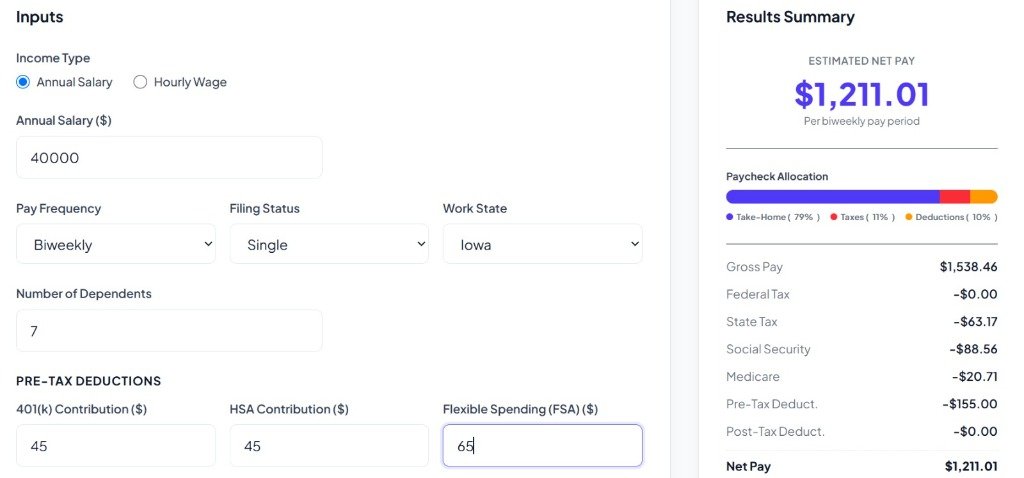
This comprehensive guide explains how payroll works in Iowa, what affects your paycheck, and how you can use an Iowa paycheck calculator to make smarter financial decisions.
What Is an Iowa Paycheck Calculator?
An Iowa Paycheck Calculator is an online payroll estimation tool designed to calculate your net pay after deducting taxes and other payroll deductions from your gross income.
It helps employees estimate:
- Gross pay
- Federal income tax withholding
- Iowa state income tax
- Social Security tax
- Medicare tax
- Retirement contributions
- Health insurance deductions
- Other voluntary deductions
- Final take-home pay
Rather than calculating payroll manually, you can enter your income details and receive an instant estimate.
Why Use an Iowa Paycheck Calculator?
A paycheck calculator is useful for many financial situations.
Budget Planning
Knowing your expected paycheck allows you to manage bills, savings, rent, groceries, and monthly expenses more effectively.
Compare Job Offers
A higher salary doesn't always result in a larger paycheck after taxes. A calculator helps you compare actual take-home income.
Financial Planning
Estimate future earnings to prepare for loans, investments, vacations, or major purchases.
Tax Withholding
Review payroll deductions and determine whether your withholding appears appropriate.
Overtime Estimation
Employees can estimate how additional work hours affect their earnings.
Understanding Payroll Taxes in Iowa
Several payroll taxes reduce your gross income before you receive your paycheck.
Federal Income Tax
Federal income tax withholding depends on several factors, including:
- Filing status
- Income level
- IRS Form W-4
- Number of dependents
- Additional withholding requests
Employers calculate withholding using IRS guidelines.
Iowa State Income Tax
Unlike some states that have no income tax or a flat tax, Iowa applies state income tax based on current tax rules. Your income level and withholding information determine how much state tax is deducted from each paycheck.
An Iowa paycheck calculator automatically estimates these deductions based on your earnings and filing information.
Social Security Tax
Employees contribute to Social Security through payroll taxes. These contributions help fund:
- Retirement benefits
- Disability benefits
- Survivor benefits
Employers also contribute an equal amount.
Medicare Tax
Medicare tax helps finance healthcare benefits for eligible individuals. Both employers and employees contribute through payroll deductions. Higher-income employees may also owe an Additional Medicare Tax under federal rules.
Gross Pay Explained
Gross pay refers to your total earnings before taxes and deductions. Gross income may include:
- Salary
- Hourly wages
- Overtime
- Bonuses
- Commissions
- Tips
- Paid vacation
- Holiday pay
Every payroll calculation begins with gross earnings.
Net Pay Explained
Net pay is the amount deposited into your bank account after all required and voluntary deductions. Typical deductions include:
- Federal income tax
- Iowa state income tax
- Social Security
- Medicare
- Retirement contributions
- Health insurance
- Dental insurance
- Vision insurance
- Other payroll deductions
This amount is commonly called your take-home pay.
Information Needed for an Iowa Paycheck Calculator
For the most accurate estimate, you'll typically enter:
- Annual salary or hourly wage
- Hours worked
- Overtime hours
- Pay frequency
- Filing status
- Number of dependents
- Retirement contributions
- Health insurance deductions
- Additional withholding
Providing accurate information improves the reliability of the estimate.
Common Pay Frequencies
Employers may pay employees using different payroll schedules. Common options include:
- Weekly
- Biweekly
- Semi-monthly
- Monthly
While pay frequency affects the size of each paycheck, it does not change your total annual earnings.
Calculating Pay for Hourly Employees
Hourly employees calculate gross earnings by multiplying: Hourly Wage × Hours Worked. Additional income may include:
- Overtime pay
- Holiday pay
- Shift differentials
- Performance bonuses
The calculator adds these earnings before estimating payroll deductions.
Salaried Employees
Salaried workers receive a fixed annual income. The calculator divides annual earnings according to the selected pay schedule before calculating taxes and deductions.
Overtime Pay
Eligible employees typically receive overtime pay after working more than 40 hours in a workweek under federal law. Overtime is generally calculated at: 1.5 × Regular Hourly Rate. Higher earnings from overtime may also increase tax withholding.
Pre-Tax Deductions
Some payroll deductions are made before taxes are calculated. Examples include:
- Traditional 401(k)
- Health Savings Account (HSA)
- Flexible Spending Account (FSA)
- Medical insurance
- Dental insurance
- Vision insurance
These deductions often lower taxable income.
Post-Tax Deductions
Post-tax deductions occur after payroll taxes have been withheld. Examples include:
- Roth retirement contributions
- Wage garnishments
- Charitable contributions
- Certain union dues
These deductions do not reduce taxable income.
Retirement Contributions
Many employers offer retirement savings plans. Common options include:
- 401(k)
- 403(b)
- Pension plans
Traditional retirement contributions often reduce federal taxable income while helping employees build long-term financial security.
Health Insurance and Benefits
Employer-sponsored benefits frequently include Coverage may include:
- Medical insurance
- Dental insurance
- Vision insurance
- Life insurance
- Disability insurance
Depending on your employer's plan, many premiums may be deducted before taxes.
Bonuses and Supplemental Income
Employees may receive additional compensation such as:
- Annual bonuses
- Performance incentives
- Sales commissions
- Signing bonuses
- Holiday bonuses
These payments are generally subject to payroll tax withholding and can temporarily increase tax deductions.
Understanding Your Pay Stub
A typical Iowa pay stub includes:
- Gross earnings
- Federal tax withheld
- Iowa state tax withheld
- Social Security
- Medicare
- Retirement deductions
- Insurance deductions
- Net pay
- Year-to-date totals
Reviewing your pay stub regularly helps identify payroll errors and ensures accurate withholding.
Common Payroll Errors
Employees occasionally encounter payroll mistakes such as:
- Incorrect filing status
- Wrong withholding information
- Missing overtime
- Incorrect retirement deductions
- Outdated W-4 information
- Benefit deduction errors
Regularly checking your pay stub can help catch these issues early.
Benefits of Using an Iowa Paycheck Calculator
Using a paycheck calculator offers many advantages.
Fast Results
Receive an estimate within seconds.
Better Financial Planning
Know how much money you'll have available after payday.
Salary Negotiation
Estimate actual earnings before accepting a new position.
Tax Awareness
Understand how payroll taxes affect your income.
Improved Budgeting
Create realistic monthly spending plans based on your net income.
Tips to Increase Your Take-Home Pay
While taxes are required, there are several ways to maximize your net pay:
- Review your W-4 periodically.
- Take advantage of pre-tax retirement contributions.
- Participate in employer-sponsored health plans.
- Contribute to an HSA or FSA if eligible.
- Track overtime opportunities.
- Review payroll deductions regularly.
- Update your payroll information after major life changes.
Who Should Use an Iowa Paycheck Calculator?
An Iowa paycheck calculator is helpful for many individuals, including:
- Full-time employees
- Part-time workers
- Hourly employees
- Salaried professionals
- Teachers
- Healthcare workers
- Manufacturing employees
- Office workers
- Human resource professionals
- Job seekers comparing offers
Why Accurate Paycheck Estimates Matter
Knowing your expected paycheck helps with:
- Monthly budgeting
- Loan applications
- Mortgage approvals
- Apartment rentals
- Tax preparation
- Retirement planning
- Emergency savings
- Investment decisions
Having a clear understanding of your take-home pay allows you to make informed financial choices throughout the year.
Conclusion
An Iowa Paycheck Calculator is an essential financial tool for anyone who wants to estimate their take-home pay accurately. By considering federal income tax, Iowa state income tax, Social Security, Medicare, retirement contributions, health insurance premiums, and other payroll deductions, it provides a realistic estimate of what you'll actually receive on payday.
Whether you're paid hourly or receive a salary, understanding your paycheck helps you budget effectively, compare job opportunities, prepare for taxes, and plan for future financial goals. Using an Iowa paycheck calculator regularly—especially after changes in salary, benefits, or tax withholding—can help you stay informed and make better financial decisions.
Frequently Asked Questions
1. What is an Iowa Paycheck Calculator?
An Iowa Paycheck Calculator estimates your take-home pay after subtracting federal taxes, Iowa state income tax, Social Security, Medicare, and other payroll deductions.
2. Does Iowa have a state income tax?
Yes. Iowa imposes a state income tax, which is withheld from employee paychecks based on current tax rules and your withholding information.
3. Can hourly employees use an Iowa Paycheck Calculator?
Yes. Hourly workers can enter their hourly wage and hours worked to estimate gross pay and net pay.
4. Does overtime affect my paycheck?
Yes. Overtime increases your gross earnings and may also increase payroll tax withholding.
5. Can retirement contributions reduce taxable income?
Traditional retirement contributions, such as a 401(k), may reduce your federal taxable income, depending on your plan.
6. Why is my actual paycheck different from the calculator estimate?
Differences may result from employer-specific benefits, additional deductions, payroll timing, or updated tax withholding elections.
7. Does health insurance affect take-home pay?
Yes. Health insurance premiums deducted from your paycheck reduce your net pay and may be deducted before taxes if your plan qualifies.
8. How often should I use an Iowa Paycheck Calculator?
It's recommended whenever your salary, work hours, tax withholding, benefits, or employment situation changes.
9. Is the calculator useful before accepting a job offer?
Absolutely. It helps estimate your actual take-home pay so you can compare employment offers more accurately.
10. Who benefits most from using an Iowa Paycheck Calculator?
Employees, job seekers, freelancers comparing employment options, HR professionals, and anyone who wants to better understand their paycheck and manage their finances.