Understanding your paycheck is essential for managing your finances effectively. Whether you're starting a new job, negotiating a salary, or planning your monthly budget, knowing how much money you'll actually take home is just as important as knowing your annual salary. A Colorado Paycheck Calculator helps estimate your net pay after taxes and deductions. It considers factors such as your salary, pay frequency, filing status, retirement contributions, health insurance deductions, and federal tax withholdings. By using a paycheck calculator, employees can make informed financial decisions and avoid surprises on payday.
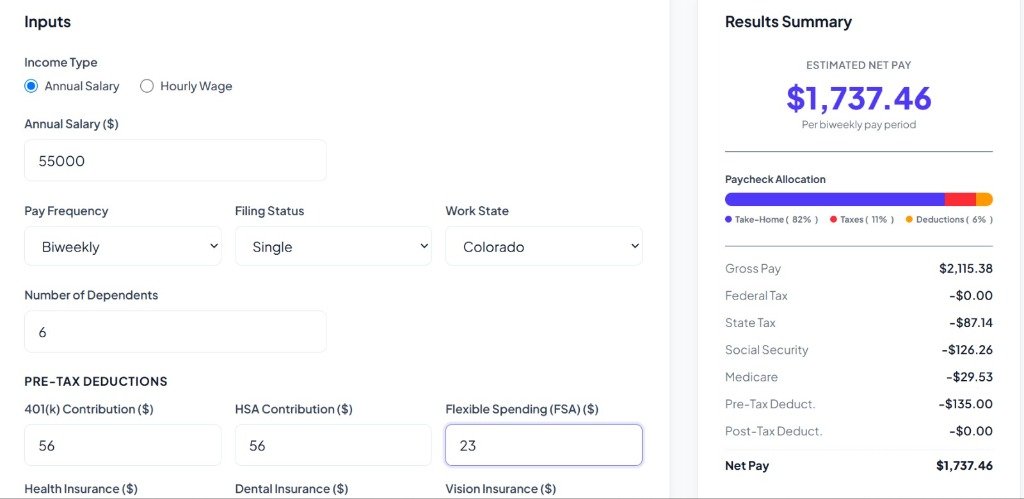
This guide explains how Colorado paychecks are calculated, what deductions affect your earnings, and how you can maximize your take-home pay.
What Is a Colorado Paycheck Calculator?
A Colorado Paycheck Calculator is an online tool that estimates how much money you'll receive after required payroll deductions.
Instead of calculating taxes manually, you simply enter information such as:
- Annual salary or hourly wage
- Hours worked
- Pay frequency
- Filing status
- Federal tax withholding
- Retirement contributions
- Health insurance deductions
- Additional pre-tax or post-tax deductions
The calculator then estimates your gross pay, taxes, deductions, and final take-home pay.
Why Use a Colorado Paycheck Calculator?
Knowing your estimated paycheck offers several advantages. It helps you:
- Create a realistic monthly budget
- Compare job offers
- Estimate overtime earnings
- Plan savings goals
- Calculate retirement contributions
- Understand payroll deductions
- Prepare for tax season
- Estimate disposable income
Whether you're a salaried employee or paid hourly, paycheck estimates provide valuable financial insight.
Calculate Your Colorado Take-Home Pay Now
Estimate your net paycheck after federal withholdings and pre-tax deductions.
Understanding Gross Pay vs. Net Pay
Before using any paycheck calculator, it's important to understand two basic payroll terms.
Gross Pay
Gross pay is the total amount you earn before taxes and deductions. Examples include:
- Annual salary
- Hourly wages
- Overtime
- Bonuses
- Commissions
- Holiday pay
Net Pay
Net pay is the amount deposited into your bank account after payroll deductions. This is commonly referred to as your "take-home pay."
How Colorado Payroll Taxes Work
Employees in Colorado are generally subject to several payroll deductions. These may include:
- Federal income tax
- Social Security tax
- Medicare tax
- Colorado state income tax
- Retirement contributions
- Health insurance premiums
- Flexible spending contributions
- Other employer-sponsored deductions
The exact amount varies depending on your income and personal elections.
Federal Payroll Taxes
Every employee pays federal payroll taxes unless exempt. These include:
- Federal Income Tax: Depends on filing status, tax bracket, W-4 details, and any additional withholdings. Higher incomes generally result in higher federal withholding.
- Social Security Tax: Withheld at a rate of 6.2% on eligible wages up to the annual wage base limit to fund retirement and disability benefits.
- Medicare Tax: Withheld at a rate of 1.45% to support federal healthcare programs.
Colorado State Income Tax
Colorado uses a flat state income tax rate, making paycheck calculations somewhat simpler than states with multiple progressive tax brackets. However, your exact withholding still depends on:
- Income levels
- Filing status
- Allowances
- Payroll elections
State tax laws may change over time, so always verify current flat rates when calculating your paycheck.
Common Payroll Deductions
Besides taxes, several deductions may reduce your paycheck. These include:
- Health Insurance: Employer-sponsored medical coverage often reduces taxable income.
- Dental and Vision Insurance: Optional insurance plans may also be deducted from your paycheck.
- Retirement Contributions: Contributions to retirement plans (such as a 401k) can lower taxable income while helping you save for the future.
- Health Savings Accounts (HSA): Eligible employees may contribute pre-tax dollars to qualified health savings accounts.
- Flexible Spending Accounts (FSA): These accounts allow employees to pay certain medical or dependent care expenses with pre-tax income.
Information Needed for a Paycheck Calculator
Most Colorado paycheck calculators require:
- Annual salary or hourly wage
- Hours worked and overtime hours
- Pay frequency
- Filing status
- Retirement contribution percentage
- Health insurance deductions
- Additional withholding elections
Providing accurate information results in a more reliable estimate.
Pay Frequencies Explained
Your paycheck amount depends partly on how often you're paid. Common payroll schedules include:
- Weekly: 52 paychecks per year.
- Biweekly: 26 paychecks per year.
- Semi-Monthly: 24 paychecks per year.
- Monthly: 12 paychecks per year.
Although annual earnings stay the same, the amount of each individual paycheck changes depending on the pay schedule.
Salary vs. Hourly Pay
Salaried Employees
Salaried workers receive a fixed annual wage regardless of hours worked, unless otherwise specified.
Hourly Employees
Hourly employees earn based on their hourly wage, hours worked, overtime, holiday pay, and shift differentials. Paycheck calculators work for both compensation types.
How to Increase Your Take-Home Pay
Although taxes are unavoidable, you may improve your net paycheck through smart financial planning. Consider:
- Reviewing your W-4 withholding
- Contributing to retirement accounts
- Taking advantage of employer benefits
- Using pre-tax healthcare accounts
- Monitoring overtime opportunities
- Reviewing benefit elections annually
Small adjustments can make a noticeable difference over time.
Budgeting with Your Paycheck
Knowing your estimated paycheck helps you build a practical budget. A basic monthly budget should include:
- Housing
- Utilities
- Transportation
- Food
- Insurance
- Savings and Emergency fund
- Entertainment
- Debt payments
Budgeting based on net income—not gross salary—provides a more accurate picture of your finances.
Common Paycheck Calculation Mistakes
Employees often make these errors:
- Using gross income instead of net income
- Forgetting benefit deductions
- Ignoring retirement contributions
- Entering the wrong pay frequency
- Using outdated tax information
- Misunderstanding overtime calculations
Double-checking your inputs helps ensure accurate estimates.
Who Should Use a Colorado Paycheck Calculator?
This tool is useful for:
- Job seekers and employees
- Freelancers comparing employment offers
- HR professionals and payroll administrators
- Students entering the workforce
- Financial planners
Anyone earning wages in Colorado can benefit from understanding their expected take-home pay.
Benefits of Using an Online Paycheck Calculator
Online calculators offer several advantages. They provide:
- Instant estimates
- Easy-to-use interfaces
- Better financial planning
- Salary comparisons
- Overtime calculations
- Tax estimation and retirement planning assistance
Many tools are free and require only a few minutes to complete.
Tips for Accurate Paycheck Estimates
For the most accurate results:
- Use your current salary.
- Select the correct pay frequency.
- Enter accurate benefit deductions and retirement contributions.
- Update your filing status if it changes.
- Review your W-4 regularly.
- Recalculate after receiving a raise or bonus.
Keeping your information current ensures better estimates.
Conclusion
A Colorado Paycheck Calculator is a valuable tool for anyone who wants to understand how much money they'll actually receive on payday. By estimating taxes, deductions, and withholdings, it provides a realistic picture of your take-home pay and helps with budgeting, job comparisons, and long-term financial planning.
Remember that paycheck calculators provide estimates. Your actual paycheck may vary depending on changes to tax laws, employer benefits, retirement contributions, overtime, bonuses, and other payroll adjustments. Reviewing your pay stub regularly and keeping your tax information up to date will help ensure your paycheck remains accurate.
Frequently Asked Questions (FAQs)
1. What is a Colorado Paycheck Calculator?
A tool that estimates your take-home pay after payroll taxes and deductions.
2. Is the calculator accurate?
It provides an estimate based on the information you enter. Actual paychecks may vary slightly.
3. What information do I need?
Salary or hourly wage, pay frequency, filing status, retirement contributions, and deductions.
4. Does Colorado have state income tax?
Yes. Colorado imposes a flat state income tax, which is generally withheld from employee paychecks.
5. Does the calculator include federal taxes?
Most Colorado paycheck calculators estimate federal income tax, Social Security, and Medicare withholding.
6. Can hourly employees use a paycheck calculator?
Yes. Hourly workers can estimate earnings based on hours worked and hourly rate.
7. Why is my paycheck lower than my salary suggests?
Taxes, insurance premiums, retirement contributions, and other deductions reduce your gross pay.
8. Can I estimate overtime pay?
Many paycheck calculators allow you to include overtime hours and rates.
9. Can retirement contributions reduce taxes?
Certain retirement contributions may lower your taxable income, depending on the type of retirement plan.
10. Should I rely only on a paycheck calculator?
No. Use it as a planning tool, but refer to your employer's payroll department or a qualified tax professional for advice on your specific situation.